




Dec 16, 2021
601
BY: Rosario Iaconis
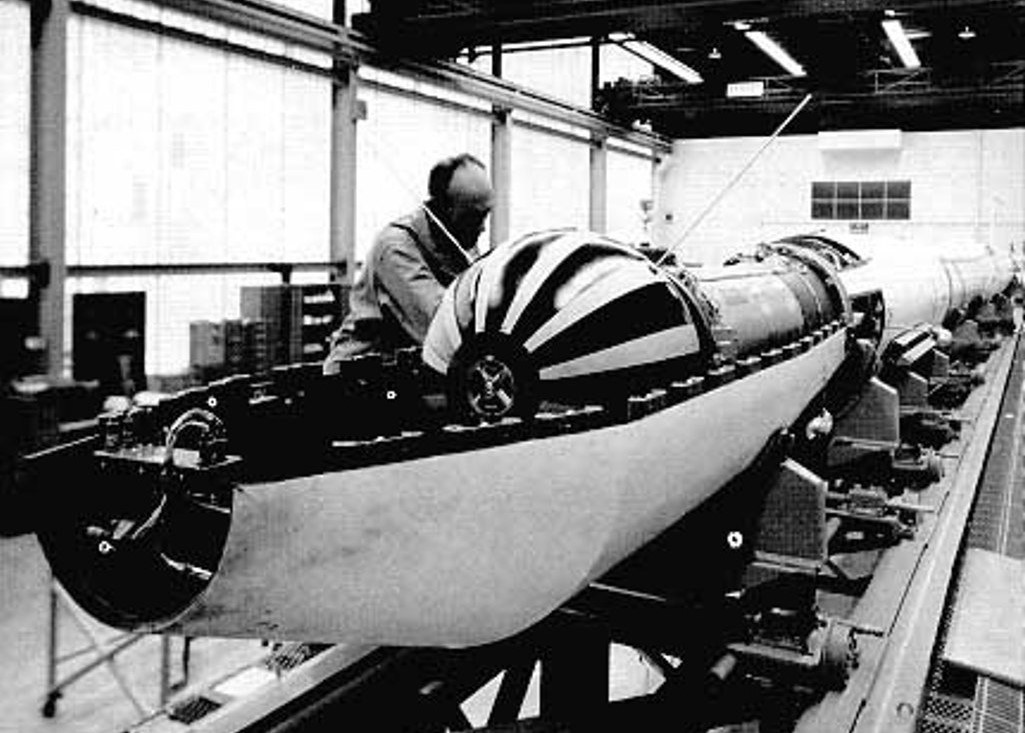
On December 15, 1964, Italy entered the space age, launching its first satellite - San Marco I - off the coast of Somalia. The San Marco program was an Italian satellite program conducted between the early 1960s and the late 1980s. With this launch, Italy became only the third country in the world to operate its own satellite. (The other two were the Soviet Union and the United States.)
San Marco was a collaboration between the Italian Space Research Commission (CRS) (a branch of the National Research Council), led by Luigi Broglio and Edoardo Amaldi and NASA. Known as “the Italian von Braun,” Luigi Broglio was the architect of the San Marco program, which made Italy a space-faring nation.
Broglio, had gained aeronautical experience during World War II. He became a major in the Aeronautica Militare Italiana (AMI) in 1950. In 1956, General Secretary of Aeronautics Mario Pezzi tapped Broglio to lead the force's Ammunition Research Unit, which spearheaded the military's rocket program. The unit ran the Salto di Quirra rocket test range on Sardinia.
In February 1961, Broglio urged Prime Minister Amintore Fanfani to create Italy's own satellite research program. San Marco I was built by members of the Commissione per le Ricerche Spaziali (CRS), a group of distinguished Italian scientists and engineers including Edoardo Amaldi , cofounder of the European Space Research Organisation (ESRO). And in 1988, the Italian Space Agency (Agenzia Spaziale Italiana)---ASI---was born. ASI coordinates the entire spectrum of Italy's space-exploration efforts.
Today, the Magic Boot continues to boldly explore the final frontier. Italy is the third leading participant in the European Space Agency's campaigns, including the Galileo and GMES projects. Indeed, ASI remains in the vanguard of space exploration, embarking on many scientific missions with NASA and ESA to explore Mars, Jupiter, Saturn and Venus----as well as all matters cosmological. Other scientific enterprises include the astrophysical study of high energy and black matter on board the International Space Station.
Italy leads all European countries in terms of investment in the ISS. And two notable Italian astronauts aboard the International Space Station have been Luca Parmitano, who hails from Palermo, and Samantha Cristoforetti of Milan.
In 2022, Samantha Cristoforetti will become the first European woman to command the International Space Station (ISS). Cristoforetti, popularly known in Italy as AstroSam, will take charge during Expedition 68a.