




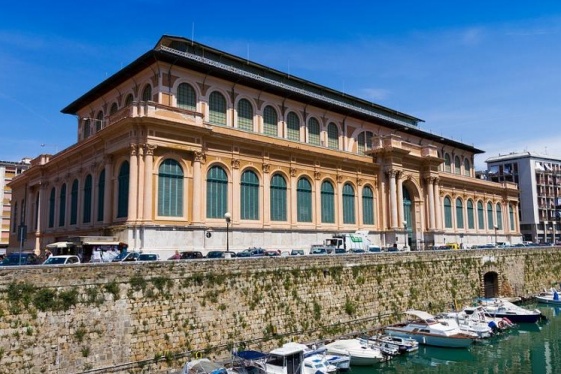
Livorno’s Central Market is a Feast For the Senses
A few years ago now a Florentine friend gave me one of the simplest and most useful travel tips I’ve ever received. When moving around Italy, he recommended, the best way to get the sense of an area, be it a town, a village, or a large city, is to head to the nearest market. It’s a wise maxim, and one I’ve held close over the years. From Turin’s P...
READ MORE
5-part lecture series: Art in Florence
Online Lecture Series. Sundays 9:30 am PST / 12:30 pm EST / 6:30 pm ITALY. Join expert Florence tour guide Laura Cirri as she gives an insider's introduction to the museum and churches of Florence. Tickets $20-25 for the whole series on Eventbrite. Click here. This is a collaboration between ICC and CulturalItaly. A portion of the proceeds are dona...
READ MORE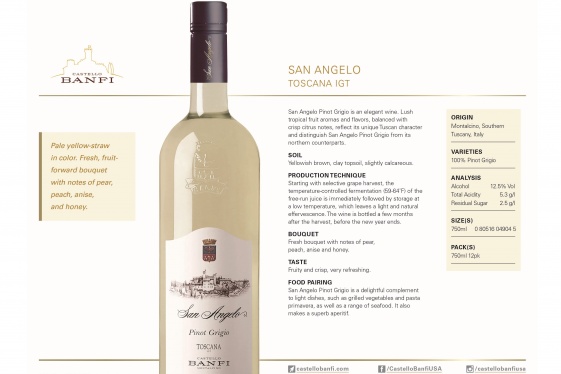
Castello Banfi ‘San Angelo’ Pinot Grigio Toscana 2019, Tuscany, Italy
No white wine from Italy is more recognizable than Pinot Grigio, which is almost synonymous with Italian whites. This is both good and bad — good in that the variety has been a bonanza for Italian wine in general; bad in that mass production has led to a plethora of generic, nondescript Pinot Grigios, which nonetheless have met the demand for a gla...
READ MORE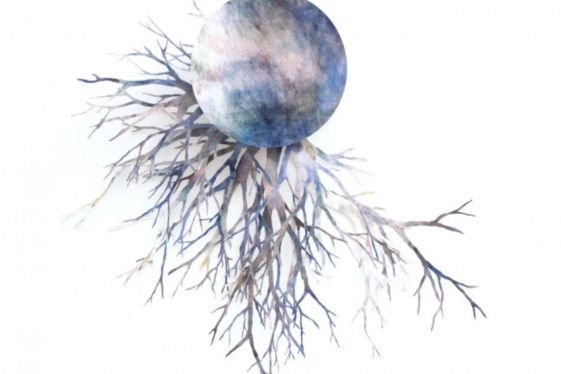
From Viareggio to Brooklyn, the Universe Inside Angelica Bergamini
It is the end of 2016. In America, Trump has just been elected President. Angelica Bergamini has lived in Brooklyn since 2006. She’s an artist from Viareggio who relocated to New York. After the elections, she began producing a new kind of work: her recurrent motif now takes the form of a root. A sort of flight from the climate of uncertainty preva...
READ MORE
Italian cuisine: Spinach dumplings
Gnudi is a typical Tuscan dish made with spinach or erbette, ricotta, Parmesan cheese and served with butter and sage or tomato sauce. The term gnudi comes from the Tuscan dialect which means "naked" and emphasizes the "nakedness" of these dumplings compared to ravioli, which are instead covered with a layer of pasta. It is an easy and simple recip...
READ MORE
Italian handcrafts: Lisio Silk
Manifattura Arte della Seta Lisio (the Lisio Silk Art Factory) was established in Florence in 1906 by Giuseppe Lisio, a determined and enterprising man from Abruzzo. Trained in the field as a representative of Luigi Osnago di Milan, an important weaving factory that participated in the Exposition Universelle of 1900 in Paris, Lisio nurtured the dre...
READ MORE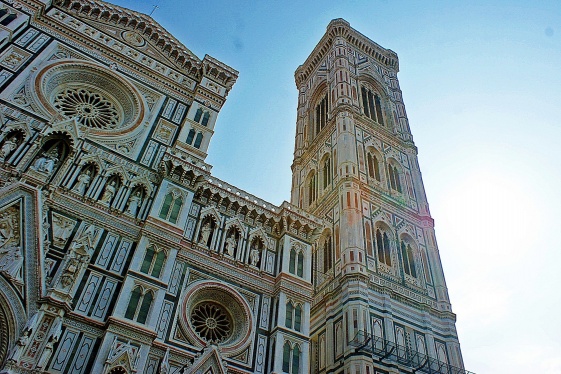
The most beautiful towers in Tuscany
Towers are one of the most characteristic aspects of Tuscan architecture. During the Middle Ages and the Renaissance, in many Italian cities were built towers and bell towers, both for military or public purposes,as well as a symbol of wealth and nobility. In Tuscany there are some so famous that they are symbols of Italian art all over the world....
READ MORE
The Strange Tale of the Chimera of Arezzo
In 1553, laborers were constructing fortifications near the Porta San Lorentino of Arezzo when they came upon an amazing discovery. In a trench along the old city wall, they found a scattering of small, ancient metal objects along with one of the most spectacular finds of ancient Italy: a bronze beast the size of a goat, snarling at them from the d...
READ MORE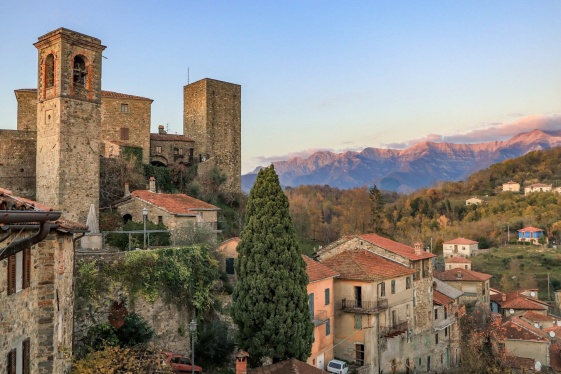
From Bagnone, Lunigiana to Weed, Ca. and the bread with seven crusts
In a small corner of Lunigiana, in the extreme north-western tip of Tuscany, lies a remarkable story bound up with the founding of a Wild West town in America. An area of outstanding natural beauty bordering the Apennines on the north, Liguria on the west and the Apuane Alps on the south, the region of Lunigiana was home to the Luni people, moon wo...
READ MORE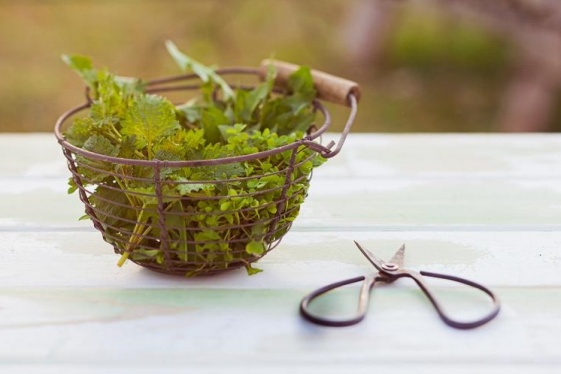
Fifty Shades of Green: A Guide to Foraging in Tuscany
Nowadays, when Michelin-starred chefs garnish a dish with delicate nasturtium flowers or wild fennel, it’s difficult to imagine these foraged goodies in any other context. From Rene Redzepi’s Noma in Sweden to Massimo Bottura’s Osteria Francescana in Emilia Romana, foraged herbs and leaves are synonymous with fine dining. But as we set out into th...
READ MORE